Standing Inside Agra Fort: Where Power, War & Beauty Met
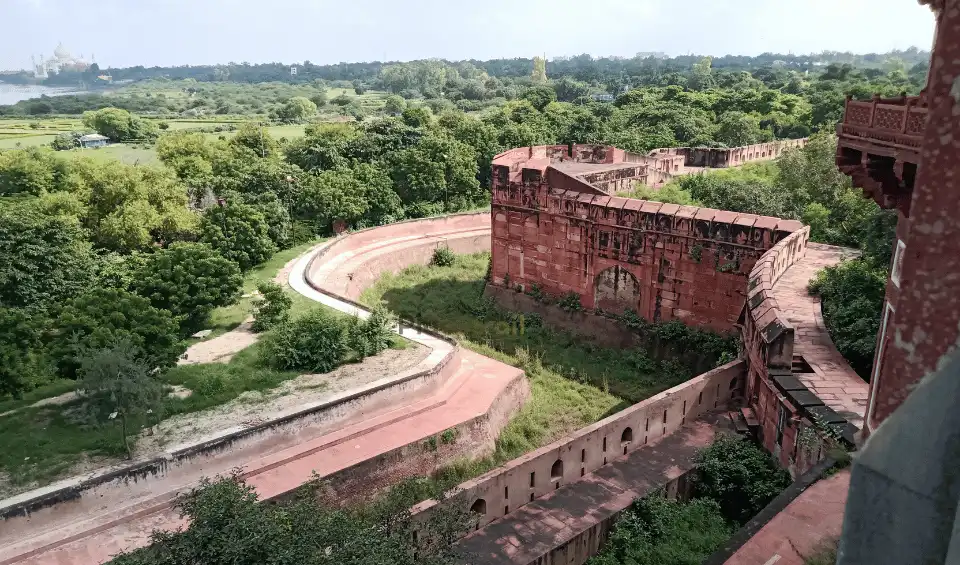
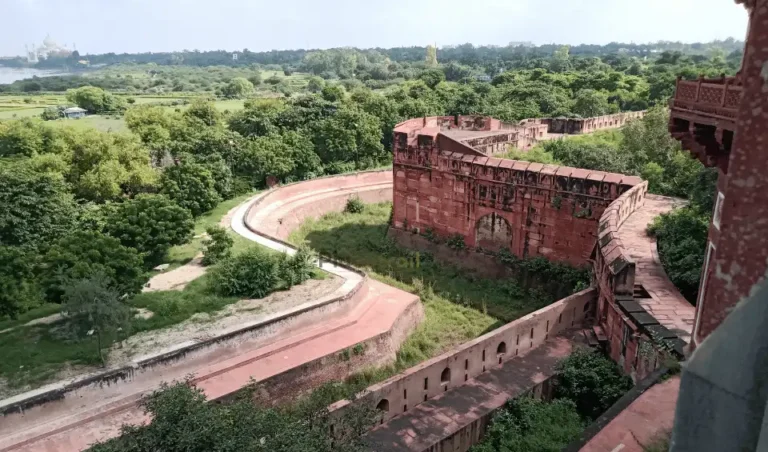
The first thing I felt when I looked at this view inside Agra Fort was silence.
Not empty silence, but the kind that feels heavy — like the walls are holding old secrets. Standing there, looking down at the curved red pathways and massive stone walls, I suddenly realized this place was not built to impress tourists. It was built to protect power.
The fort did not shout. It waited.
From above, the walls looked calm, almost peaceful, surrounded by green trees and open land. But deep inside, I could feel that this beauty was born from fear, war, and control. Agra Fort doesn’t try to be soft. It stands strong, even today.
A Fort That Was Built for War, Not Romance
When people think of Agra, they think of the Taj Mahal. Love. White marble. Beauty.
But Agra Fort is different.
This image shows the real purpose of the fort — defense.
The thick red sandstone walls, the deep moat area, and the layered structure tell one clear story: this place was designed to stop enemies, not welcome guests. Every path, every turn, every height difference had a reason.
The Mughal architects were not only builders. They were strategists.
From this angle, you can see how the fort walls are not straight. They curve. They bend. At first, it feels artistic. But the truth is darker — and smarter.
Why the Walls Curve Instead of Running Straight
Straight walls are easy to attack.
Curved walls confuse the enemy.
If attackers entered the fort, they couldn’t run straight or see far ahead. The curved pathways slowed them down. Soldiers hiding above could easily spot intruders. Arrows, stones, and later bullets could be fired from angles attackers never expected.
Standing there, looking at those curves, I imagined footsteps rushing, armor clashing, and panic filling the air centuries ago. The same path that feels peaceful today once controlled life and death.
This is what makes Agra Fort powerful — its intelligence.
Nature as a Silent Soldier
What surprised me the most was the greenery.
Trees surround the fort. Grass grows where soldiers once marched. Birds fly where watchmen once stood. Nature has slowly wrapped itself around this place, but even nature played a role in defense.
The open land around the fort made it hard for enemies to hide. Anyone approaching could be seen from far away. The moat area added another obstacle. During Mughal times, this space was not just empty land — it was a trap.
Today, the green view feels calming. But once, it was part of a deadly system.
That contrast hits you hard when you stand there. Beauty and danger sharing the same space.
Walking Where Mughal Emperors Once Walked
As I stood inside Agra Fort, I couldn’t stop thinking about who had walked here before me.
Akbar. Jahangir. Shah Jahan. Aurangzeb.
These were not just names from history books. They were men who ruled empires from behind these walls. Decisions that changed India were made here. Wars were planned here. Prisoners were held here.
It is said that Shah Jahan, who built the Taj Mahal, was later imprisoned inside Agra Fort by his own son. From somewhere within these walls, he could see the Taj Mahal — the symbol of love he built — but could never reach it.
When you look carefully, you can even spot the Taj Mahal far in the distance from Agra Fort. That single view connects love and power, beauty and cruelty, freedom and captivity.
That thought stayed with me.
Power Feels Different When You’re Standing Inside It
Power doesn’t always feel loud.
Inside Agra Fort, power feels quiet, heavy, and permanent. The walls don’t decorate themselves. They don’t try to look gentle. They exist to remind you who was in control.
Standing there, I felt small. Not in a bad way, but in a humbling way. This place has seen centuries pass. Kings rose and fell. Empires disappeared. And yet, the fort still stands.
You don’t just see history here.
You feel it.
A Personal Moment I Didn’t Expect
I went to Agra thinking I would be most impressed by the Taj Mahal.
But it was Agra Fort that stayed with me longer.
This view — the curves, the walls, the greenery, the silence — made me slow down. I stopped clicking photos for a moment. I just stood there.
For a few seconds, I imagined being a guard posted here long ago, watching the land, waiting for signals, responsible for protecting an empire. Then I imagined being a prisoner, walking the same path, knowing there was no escape.
The same stone. Very different lives.
That’s the magic of Agra Fort. It doesn’t tell you what to feel. It lets you discover it yourself.
Why This View Matters More Than Perfect Pictures
Most people rush through Agra Fort. They look at halls, palaces, and courtyards. They take photos and move on.
But this view — the defensive side, the military soul of the fort — tells the real story. This is where power lived. This is where fear was controlled. This is where beauty was secondary.
If you ever visit Agra Fort, don’t just look for famous spots. Stop somewhere quiet. Look down. Look far. Let the place speak.
Because standing inside Agra Fort is not just about seeing history.
It’s about feeling what power, war, and beauty look like when they meet — and stay frozen in stone.